Ivory-billed Woodpecker

A Search for the Ivory-billed Woodpecker

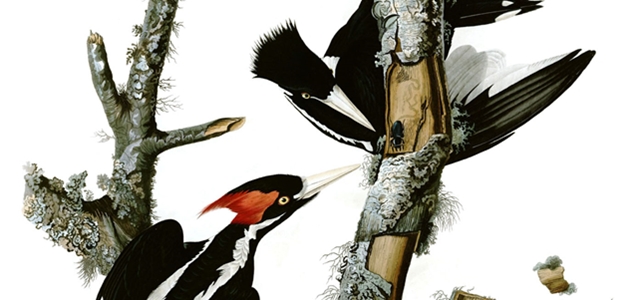
Aside from the Passenger Pigeon, the Ivory-billed Woodpecker is perhaps the most legendary North American bird. An impressive, large bird with striking features, the survival of the Ivory-billed Woodpecker has been the subject of fascination and debate for more than a century. That led the National Aviary to join an ongoing search effort to find this elusive species, together forming Project Principalis.

Through this project, the National Aviary collaborates with independent researchers, community scientists, and nature enthusiasts who once made up the long-running Ivory-bill search, known as Project Coyote. 

At the invitation of Matt Courtman, the National Aviary joined Project Coyote and the search effort in 2018, then forming the new Project Principalis. 

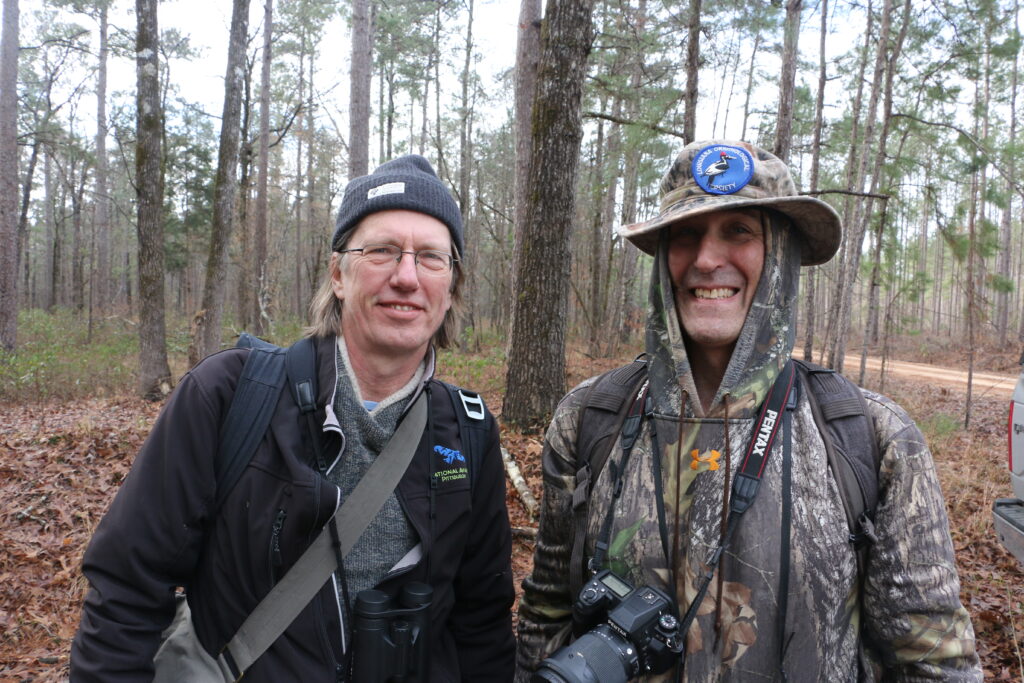
Steve Latta and Mark Michaels
Dr. Steve Latta and independent researcher Mark Michaels in Louisiana

Embarking on new, cooperative efforts, we expanded the search’s intensity through proven scientific methods. Bringing in University of Pittsburgh faculty and students, we focused on the usage of remote Acoustic Recording Units (ARU) to gathering acoustic data. We also sought out partners in molecular genetics and began collecting environmental DNA (eDNA) samples. We also expanded the number and hours of boots on the ground in an effort to locate possible roosting or nesting sites.

Our goal as researchers is to document Ivory-billed Woodpeckers at our study site in Louisiana, to document concrete evidence that establishes the species’ persistence, and to start gathering behavioral data about what we believe is at least one group of surviving birds.

Read the Learn More About Our Ongoing Work section below and discover: The Ivory-billed Woodpecker’s history in North America, what makes the species unique, and our efforts at establishing without a doubt that the Ivory-billed Woodpecker persists in Louisiana.

Additionally, learn about the evidence we have gathered so far, such as the first peer-reviewed paper since the 1930’s that presents multiple lines of evidence indicating the survival of the Ivory-billed Woodpecker in Louisiana, under the next section: Latest News from Our Work.

Latest News from Our Work

I. New Peer-Reviewed Paper about the Ivory-billed Woodpecker

Encouraged by the recent announcement of the U.S. Fish and Wildlife Service’s decision to postpone the delisting of the Ivory-billed Woodpecker (Campephilus principalis), Project Principalis, a partnership of the National Aviary and independent reseachers continues to research the existence of the iconic species.

Prior to the extension, the research team released new evidence supporting the persistence of Ivory-billed Woodpeckers in Louisiana. The research appears in the open access peer-reviewed journal, Ecology and Evolution. The paper builds on an existing body of work and presents personal accounts, audio recordings, trail camera images, and drone footage depicting multiple birds, supplemented with new videos.

Read more about the research here.

The National Aviary is a leader in avian conservation, animal care, and education. 
You can support our work, including initiatives like these.

Donate Today

II. Presented Video Evidence to U.S. Fish and Wildlife Service

The findings, which suggest the continuing survival of the iconic birds in Louisiana, include a pre-print paper documenting multiple lines of evidence published earlier this year on the pre-print server bioRxiv, and new video evidence showing what appears to be an Ivory-billed Woodpecker. The submissions are available for the public to access on the United States Fish and Wildlife Service website. The video can be viewed here.

View the full presentation to U.S. Fish and Wildlife Service including supplemental materials and video, and find additional supporting comments here. Read the press release announcing the new findings here.

Press inquiries: please contact [email protected] or call 412-258-1144.

Researchers are aiming to document Ivory-billed Woodpeckers, document concrete evidence that establishes the species’ persistence, and start gathering behavioral data about what they believe is at least one group of surviving birds.

Learn More About Our Ongoing Work

Listen to the enchanting call of the Ivory-billed Woodpecker incorporated into the melody of Boscoyo Fleaux ft. Dickie Landry by Louis Michot.

For media inquiries, please contact the National Aviary’s Department of Marketing and Communications at [email protected].

For general questions and comments about the work of Project Principalis, please contact [email protected].

Support this important project by directing your donation to Project Principalis.

Support Our Work

In The News

See All News

The Invisible Clues Animals Leave Behind Are Helping Save Entire Ecosystems (featuring an interview with Dr. Steve Latta) | A-Z Animals

In this article, we speak with Dr. Steven Latta, Director of Conservation and Field Research at The National Aviary. In his own work, he collects eDNA samples from water, leaf litter, feathers, egg shells, and other substrates to identify species presence.

Read More »

Why Animals in Cold Climates Are Bigger: The Science Behind Bergmann’s Rule (featuring an interview with Bob Mulvihill) | A-Z Animals

“Large animals can conserve heat more efficiently than smaller animals in cold climates,” explains Bob Mulvihill, Lead Ornithologist for the National Aviary.

Read More »

Penguins To Hold ‘Penguins Pledge Night’ Presented by U. S. Steel | Pittsburgh Penguins

The Penguins Pledge will also raise funds and call attention to the National Aviary in Pittsburgh and their conservation leadership with African Penguins.

Read More »

Record Number of Peregrine Falcons Counted in Allegheny County | National Today

Conservation efforts have helped the raptor species rebound in the region.

Read More »

Why Are There No Birds in My Birdhouse? I Asked Expert Bob Mulvihill Who Told Me How to Attract Birds to Any Birdhouse | Gardening Know How

To help ensure your birdhouses are as appealing to birds as possible, [we] asked a National Aviary Ornithologist Bob Mulvihill for the most common reasons why houses remain vacant and how to make houses more attractive to garden birds.

Read More »